Dental Implant Healing Time: How Long It Takes and What It Depends On
The period during which an implant fuses with the bone is called osseointegration. On average it takes 2 to 6 months and depends on bone density, the implant system chosen and the patient's overall health.

- Lower jaw: 2–3 months; upper jaw: 4–6 months.
- With bone grafting or a sinus lift: 6–9 months.
- Immediate implant placement: 3–5 months; with immediate loading, a temporary crown is fitted within 1–3 days.
- Today over 98–99% of implants integrate successfully.
If you are missing one or more teeth, the bone quickly loses volume without chewing load. Neighbouring teeth start drifting into the gap, the bite deteriorates and, over time, facial features may even sag. That is why dental implant treatment is not just about aesthetics — it protects the whole jaw.
It is a fairly complex, lengthy procedure that requires thorough preparation, careful execution and following certain rules afterwards. The healing period is called osseointegration. On average it takes 2 to 6 months. Practically everything affects implant healing time — bone density, the chosen system (Straumann, Osstem, etc.) and the patient's general health.
Why the body does not reject an artificial root
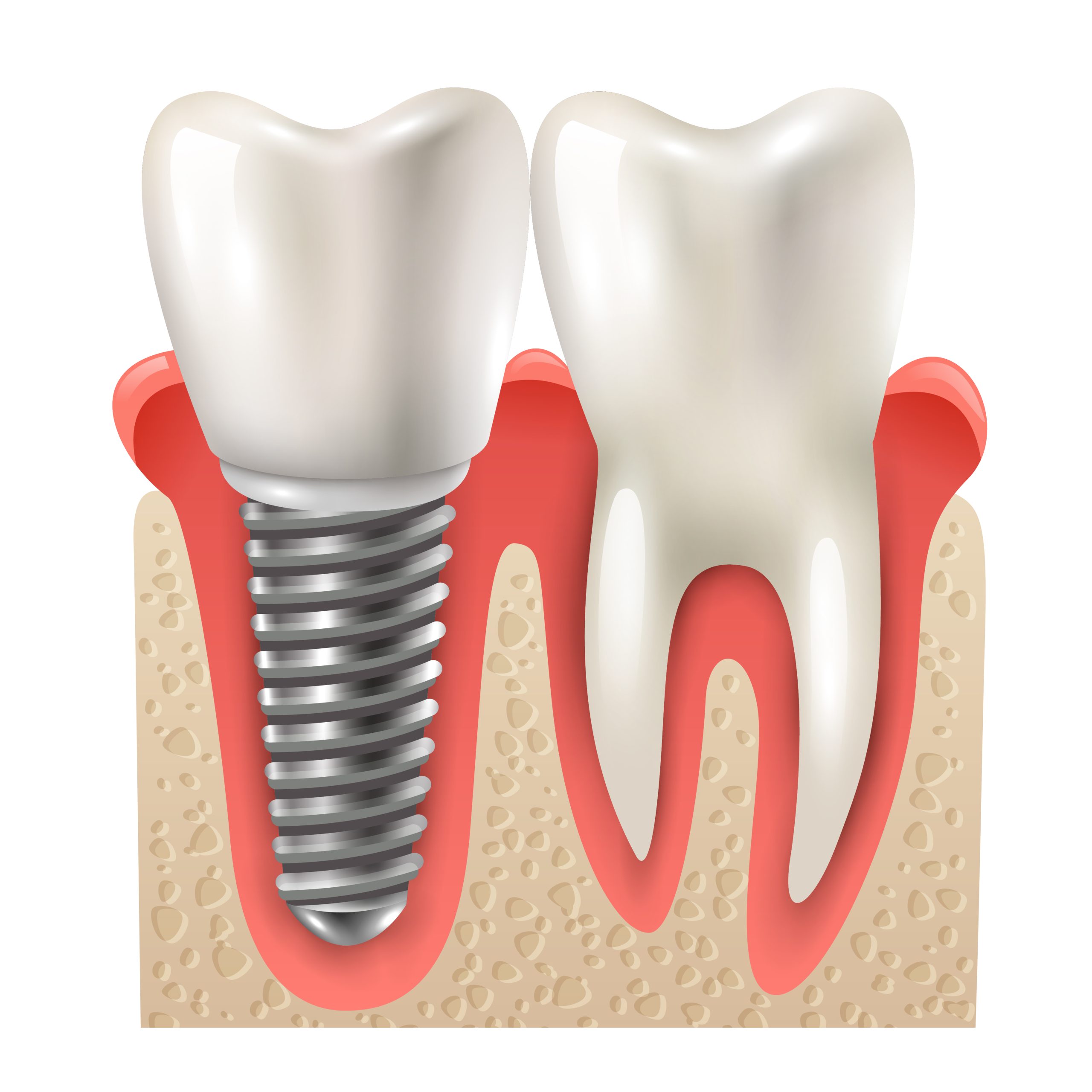
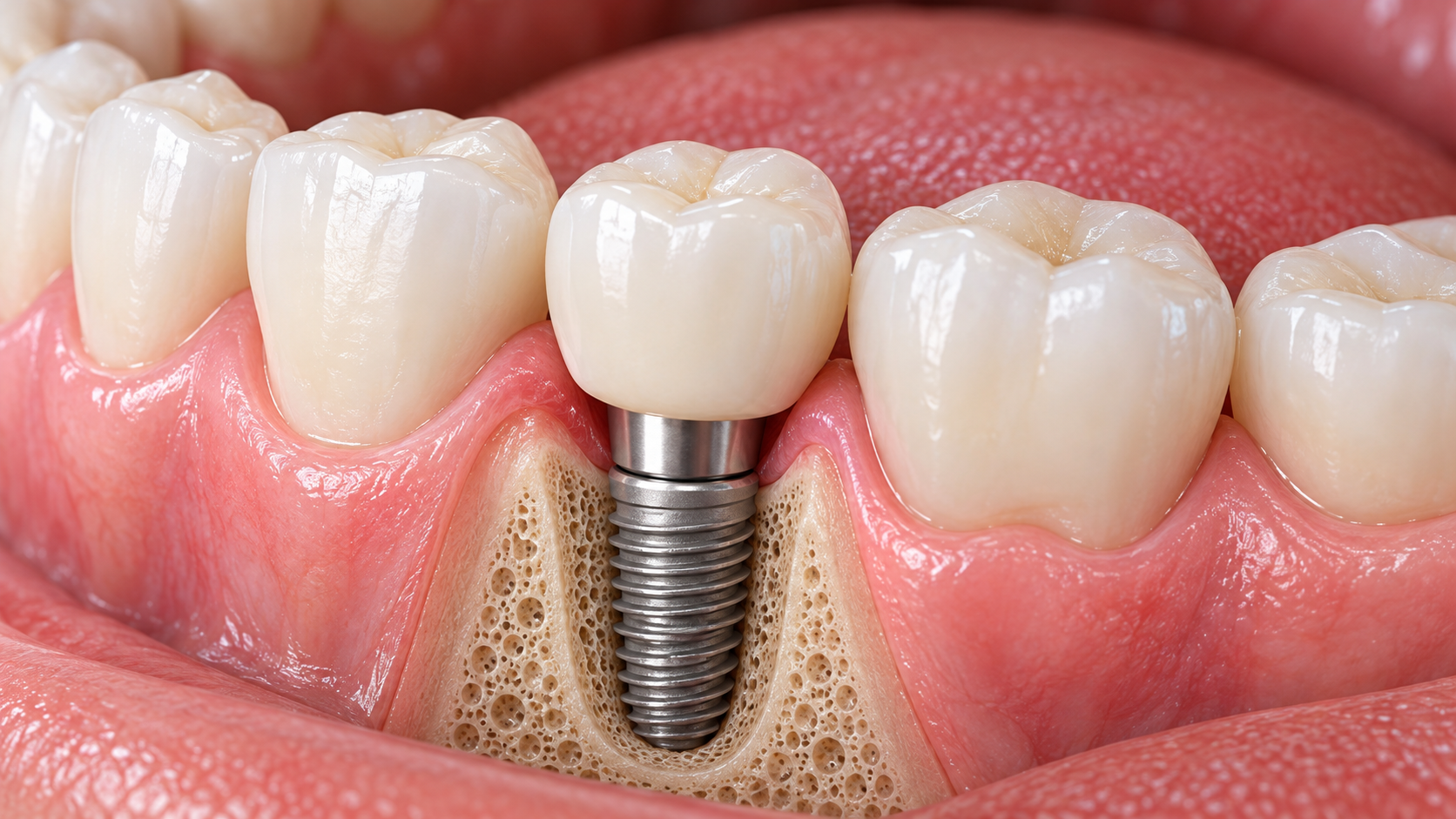
Osseointegration is more than just implant healing. Bone tissue grows into the micropores of the implant post, making it one with the jaw. Unlike dental bridges, an implant works like a real root: it transfers chewing pressure to the bone and stimulates blood flow, preventing atrophy.
Today, over 98–99% of implants integrate successfully. Here is why:
Both materials are fully biocompatible: the body's defence reactions are not triggered, and titanium or zirconia fuses calmly with the bone. This rules out toxic reactions or systemic rejection of the implant by the oral tissues. The oxide film itself also creates a favourable environment for young bone cells to attach quickly.
How long healing takes: timelines by clinical situation
Lower jaw vs upper jaw
Jaw anatomy directly affects recovery time after implant placement:
- In the lower jaw, healing takes 2 to 3 months: the bone is denser and the blood supply is richer.
- The bone of the upper jaw is more porous, and the maxillary sinuses lie close by. Full integration takes 4 to 6 months.
This anatomical difference calls for individually adjusted loading. Upper-jaw bone needs more time to mineralise around the titanium thread. Rushing the prosthesis on the upper jaw can loosen the artificial root.
With bone augmentation (bone grafting)
When a tooth has been missing for a long time, the bone naturally resorbs. In such cases, bone grafting or a sinus lift (in the upper jaw) is needed before the implant is placed. Sometimes bone augmentation can be combined with implant placement in a single visit. Healing then extends to 6–9 months, because the body needs time to form and strengthen new bone around the graft.
Immediate implant placement and immediate loading
However, if a tooth is being extracted right now, you don't have to wait for months. Modern dentistry offers immediate implant placement protocols, where the artificial root is placed in the socket right after extraction. Moreover, when initial implant stability is high, immediate loading is used — a temporary crown is made and fitted within just 1–3 days.
This makes it possible to solve the problem in one visit to the surgeon, preserve the natural gum contour and, importantly, avoid putting life on hold because of a gap in your smile. Just remember that this accelerated scenario isn't for everyone: the doctor makes the final call only after a detailed CBCT scan analysis.
| Clinical situation | Approximate time | What happens |
|---|---|---|
| Lower jaw (standard protocol) | 2–3 months | Dense bone, fast fixation |
| Upper jaw (standard protocol) | 4–6 months | Porous bone, longer process |
| Immediate implant | 3–5 months | Natural gum contour is preserved |
| Implant + sinus lift / bone graft | 6–9 months | Time is needed for the bone graft to mature |
| All-on-4 / All-on-6 protocols | 3–4 months | Temporary adaptive prosthesis from day 1–3 |
How the implant brand and your health affect healing
How quickly and smoothly an implant heals largely depends on the quality of its surface treatment. To help the titanium post fuse better with the jaw, its surface is roughened at a microscopic level using sandblasting, acid etching or a special nano-coating.
With such a surface, bone cells bond faster and more actively. Of course, technology alone does not guarantee 100% success — your general health plays a huge role. Chronic diseases and bad habits can slow down regeneration. Below is a comparison of the main implant systems to help you understand the differences between popular manufacturers.
| Brand / country | Surface / technology | Healing time | Features and benefits |
|---|---|---|---|
| Straumann (Switzerland) | SLA / SLActive (hydrophilic) | 3–4 weeks (SLActive) 6–8 weeks (SLA) | The fastest healing times; suitable for patients with diabetes and smokers. |
| Nobel Biocare (Switzerland / USA) | TiUnite (phosphorus-enriched) | 1.5–3 months | Excellent primary stability; ideal for All-on-4 protocols and immediate crown placement. |
| Osstem (South Korea) | SA / CA (calcium-activated) | 2–3 months | A reliable global brand with the best value for money. |
| MIS (Israel) | B+ (phosphonate ions) | 2–3 months | Versatile implants with predictable results for complex clinical cases. |
Premium brands Straumann and Nobel Biocare can significantly shorten the waiting period and suit complex health situations. Korean and Israeli systems are also reliable but more affordable. The final choice of implant should be made together with your doctor, taking into account the individual anatomy of your jaw.
General health
The speed of regeneration also depends on metabolism (vitamin D and calcium levels) and bone density.
Each of these factors slows down the natural recovery of bone tissue. That is why basic lab tests before surgery are important. A responsible attitude to your health reduces the likelihood of complications after surgery.
Healing stages week by week
A blood clot forms and the soft tissues heal. Moderate swelling and discomfort last 3–7 days and are relieved with painkillers. On day 10–14 the surgeon removes the stitches.
Initial mechanical stability decreases, while secondary (biological) stability builds up. New bone tissue forms actively.
Bone tightly surrounds the implant thread. In the lower jaw this process is often complete, so a healing abutment can be placed.
Osseointegration is completed in the upper jaw and after bone grafting. Impressions are taken to make the permanent crown.
Monitoring each of these stages allows surgeons to assess healing progress in time. It is important not to skip scheduled check-ups, even if nothing bothers you. Only once the bone has fully matured can the doctor safely start the final stage — permanent prosthetics.
How to help your implant heal and spot complications
Recommendations for the first days:
- Take the medication prescribed by your doctor (antibiotics, painkillers).
- Apply a cold compress during the first 24 hours (10–15 minutes at a time).
- Eat warm, soft food and chew on the opposite side.
- For the first 3 days, do not rinse vigorously — use gentle antiseptic mouth baths.
- Avoid the gym, sauna, hot baths and flights for 7–10 days.
Following these rules helps the soft tissues heal calmly. Mechanical irritation or overheating in the first 2–3 days can dislodge the blood clot and let infection in. Proper home care is half the success of implant treatment.
Warning signs (peri-implantitis and implant failure)
How can you tell if an implant is failing? See your doctor immediately if:
- Pain does not ease but gets worse 5–7 days after surgery.
- There is marked swelling, redness, pus or an unpleasant smell.
- The implant feels loose.
- Your temperature stays above 38°C for more than two days.
Spotting any of these symptoms early allows the inflammation to be stopped at an early stage. Special antiseptic treatment and therapy help save the titanium root. The key is not to self-treat and to tell your implant surgeon about your condition straight away.
Frequently asked questions
Does getting an implant hurt?
Implant placement is painless under local anaesthesia or sedation. Post-operative discomfort passes within 3–5 days.
From what age can you get dental implants?
Once the skeleton has finished developing — usually from 18–21 years of age. There is no upper age limit.
How long does an implant last?
With proper care and good hygiene, an implant lasts a lifetime. Premium manufacturers offer a lifetime warranty on implant posts.